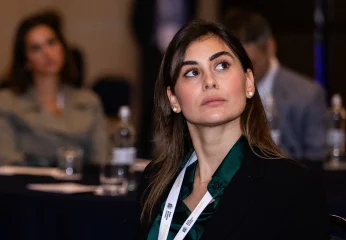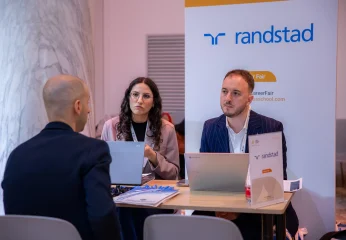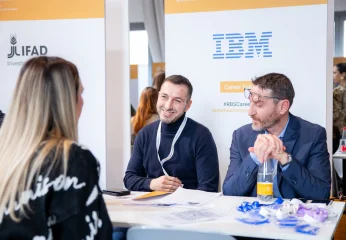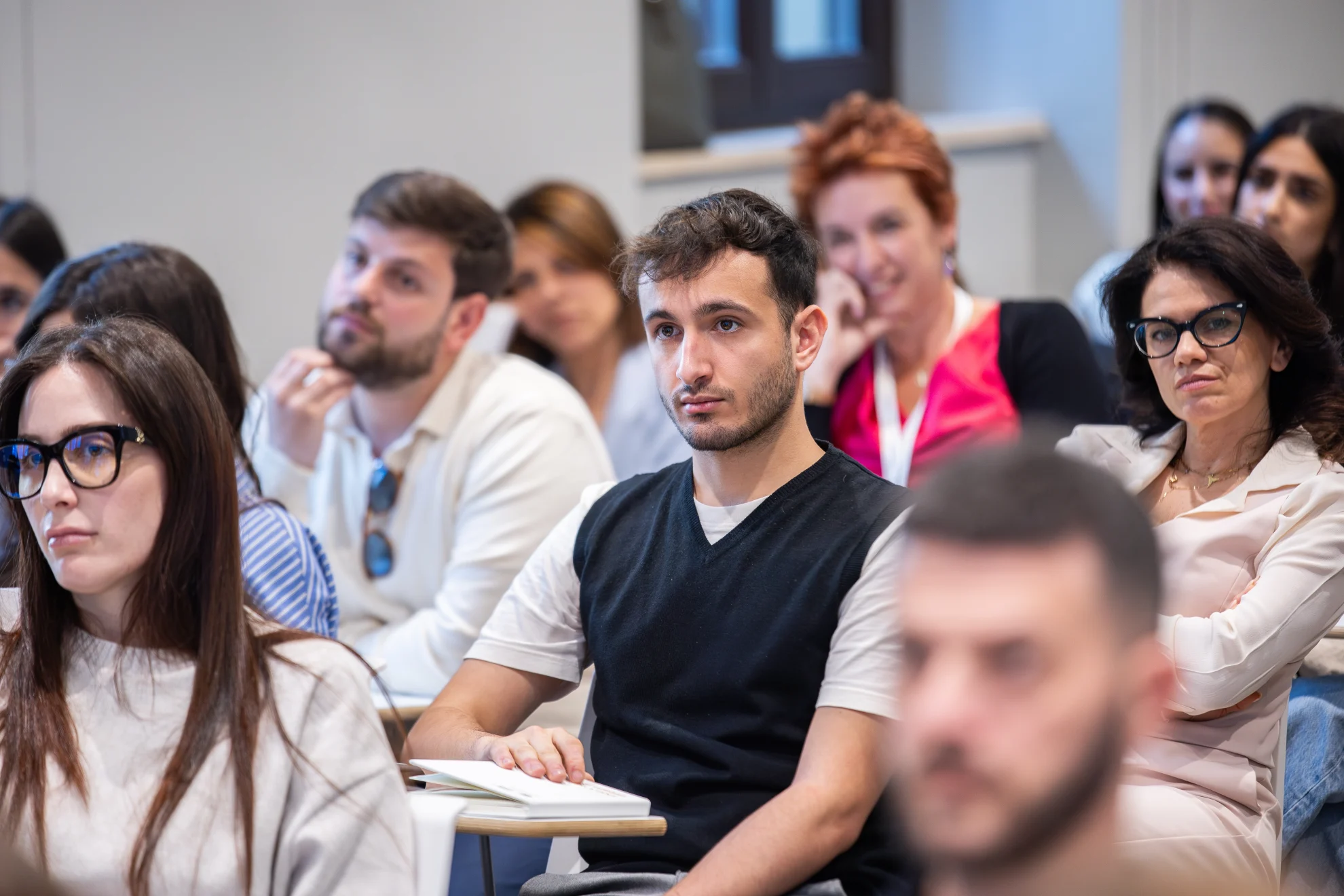
On the occasion of the 10th edition of ASFOR Master Day, Rome Business School hosted “Developing Tomorrow’s Leaders: Human Capital as a Competitive Advantage”, a session led by Natasha Valentine, Program Director of the ASFOR-accredited Master in HR and Organization. The discussion explored the strategic role of human capital in leadership development, organisational culture and business competitiveness.
How can companies turn human capital into a genuine competitive advantage? This was the central question explored during “Developing Tomorrow’s Leaders: Human Capital as a Competitive Advantage, the session hosted by Rome Business School on 8 October as part of the 10th edition of ASFOR Master Day, an initiative promoted by the Italian Association for Management Education.
The discussion examined the role of people in organisational growth, highlighting how skills, experience, interpersonal capabilities and professional development can become strategic assets for building competitive and resilient businesses.
The session was opened by Leo Goretti, Associate Dean at Rome Business School, and led by Natasha Valentine, Program Director of the ASFOR-accredited Master in HR and Organization. Through questions addressed to participants and reflections drawn from her professional experience, Valentine invited the audience to rethink the role of Human Resources: moving beyond an administrative function towards a strategic driver of people development and business growth.
The discussion began with a question to the audience: “When you think about a company’s competitive advantage, what comes first to your mind?”
This opening question introduced a broader reflection on the relationship between business strategy, people and the ability to create long-term value.
Natasha Valentine reflected on the evolution of the HR function, recalling how, early in her career, it was often associated primarily with personnel administration and process management. Today, however, a human capital perspective requires a broader approach, integrating skills development, organisational culture and people’s growth into business strategy.
From this perspective, human capital is not simply the workforce within an organisation. It encompasses the knowledge, experience, capabilities and potential that individuals bring to their roles and continue to develop throughout their professional lives.
HR professionals therefore have a broader responsibility: they also act as custodians and promoters of organisational culture, helping create the conditions for people to grow, contribute to shared goals and realise their potential.
One of the session’s key messages was that human capital is constantly evolving. Professional capabilities do not develop at a single point in a career; they grow through a continuous journey that begins with early personal and educational experiences.
Every internship, first job, new role or career transition adds to an individual’s knowledge and skills. Each new experience builds on previous ones, shaping not only what professionals can do, but also who they are and who they aspire to become.
As Natasha Valentine explained:
“Human capital evolves from the early age, not just now as adults and we are constantly building up our knowledge and experience it’s very important organizations take time deploy the human capital to get a competitive advantage.”
Human capital begins developing at an early age and continues to grow through the accumulation of knowledge and experience. For organisations, recognising this process means investing time and attention in identifying and developing available capabilities, creating the conditions to turn them into a competitive advantage.
This perspective also highlights the individual’s responsibility in shaping their professional journey. Skills development cannot depend exclusively on the employer or on formal performance reviews. It requires active participation, awareness of personal goals and the ability to communicate the value one can bring to an organisation.
Another key theme explored during the session was the role of communication in professional development.
Employees should not have to wait for an annual performance review to discuss their newly acquired skills, career aspirations or development opportunities with their managers. Ongoing dialogue with team members and leaders helps make capabilities visible, align expectations and identify new learning opportunities.
Building human capital is therefore a shared responsibility. Individuals need to recognise their strengths and communicate them effectively, while organisations must identify potential, provide development opportunities and support career paths aligned with individual capabilities.
This balance is essential to creating workplaces where professional growth is not an isolated event, but an integral part of the employee experience.
From Individual Skills to Organisational Capability
Developing human capital is not only about individual professionals. The real challenge for organisations is to transform individual capabilities into collective strengths that support innovation, collaboration and business objectives.
The session highlighted the importance of psychological safety: creating an environment where people feel able to express ideas, raise concerns, ask questions and contribute without fear of negative judgement.
For leaders, fostering psychological safety means creating the conditions in which individual skills can benefit the wider team and translate into shared learning and organisational capability.
In this context, leadership goes beyond directing work. It involves building an environment where people can realise their potential, take responsibility and actively contribute to change.
The themes explored during ASFOR Master Day highlight the role of management education in developing professionals who can understand people, navigate organisational dynamics and contribute to business strategy.
Rome Business School’s ASFOR-accredited Master in HR and Organization reflects this perspective, focusing on the capabilities required to address changes in the world of work and support organisational transformation.
HR education requires an approach that integrates processes, strategy, leadership, corporate culture and people development. In a business environment shaped by technological change and evolving professional expectations, understanding how to attract, develop and maximise human capital is an essential capability for HR professionals and business leaders alike.
The 10th edition of ASFOR Master Day provided an opportunity to explore these challenges, underlining the importance of an approach to education that connects individual growth with organisational objectives and competitiveness.