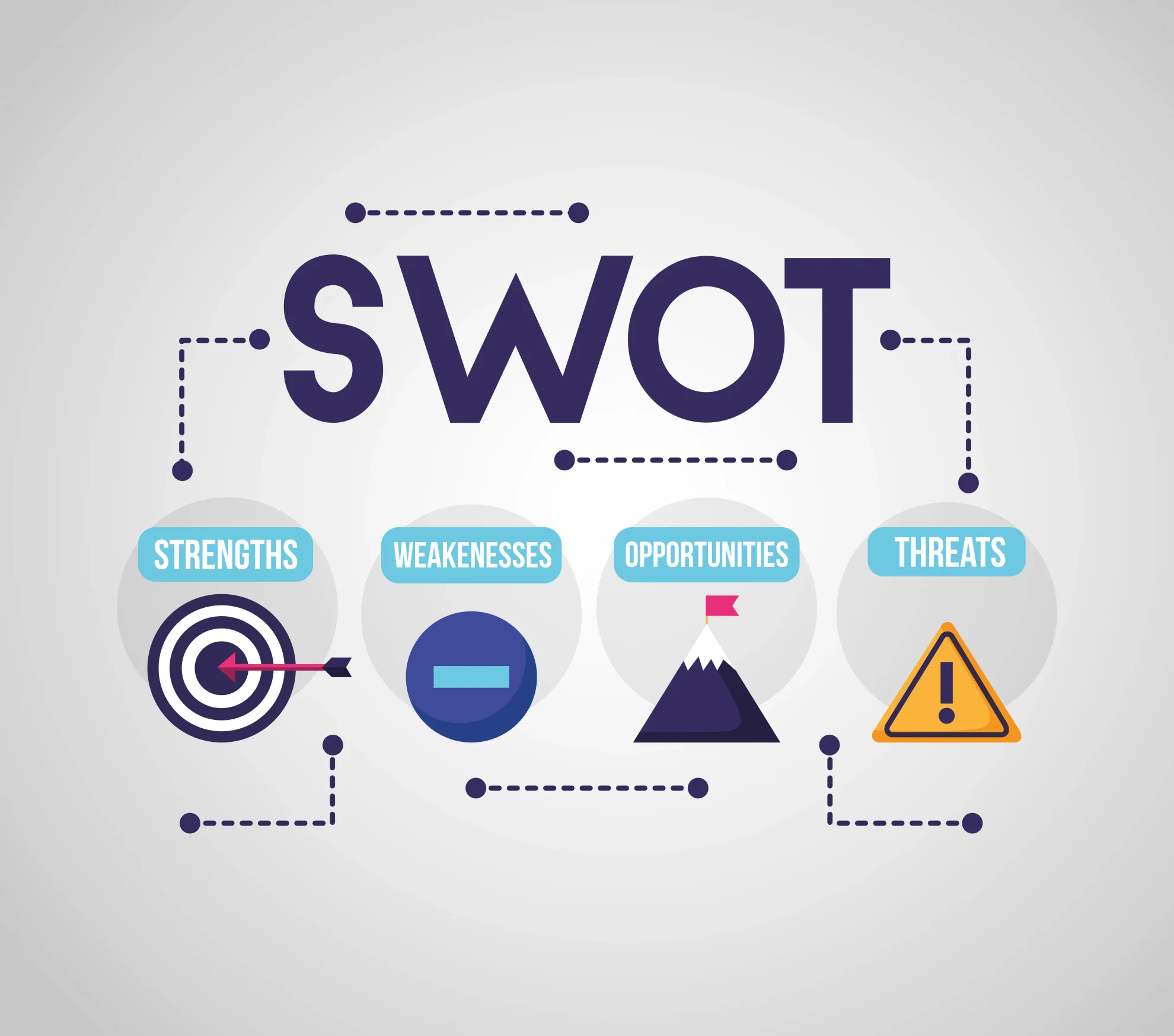
The meaning of a SWOT analysis
If you are wondering about the swot analysis meaning, the acronym stands for Strengths, Weaknesses, Opportunities, and Threats. Essentially, this framework helps you identify where you stand today and where you could go tomorrow. By analyzing these four pillars, you gain a clear 360-degree view of your professional landscape.
Internal SWOT analysis: strengths and weaknesses
The first part of the framework focuses on internal swot factors. These are elements that you can directly control or improve upon yourself.
- Strengths swot: These are your unique selling points. Identify the skills, certifications, and personal attributes that set you apart. For instance, consider your past achievements and the positive feedback you consistently receive.
- Weaknesses swot: To grow, you must acknowledge your limitations. Whether it is a lack of technical knowledge or a specific soft skill gap, facing these realities allows you to transform them into areas for strategic development.
External SWOT: opportunities and threats
Next, you must look outward. The external swot analysis examines factors in the market or industry that you cannot control but can certainly prepare for.
- Opportunities swot: Look for industry trends, emerging technologies, or networking events. These external factors can provide the perfect opening for a career pivot or a promotion.
- Threats swot: Evaluate potential obstacles, such as economic shifts or intense competition. By anticipating these challenges, you can create contingency plans that protect your professional stability.
How to do a SWOT analysis? Examples
Creating your own strategy is easier when you see how others do it. To start, you should gather your insights into a swot table. This visual representation allows you to see exactly where your strengths can capitalize on opportunities.
SWOT table example: Professional Career
| Strengths | Weaknesses |
|---|---|
| 10 years of experience in Marketing. Fluent in three languages. |
Limited knowledge of Data Analytics. No experience managing large teams. |
| Opportunities | Threats |
| Rising demand for digital specialists. New Master’s programs available. |
Automation replacing manual roles. Increased competition from Gen Z. |
Practical Business Examples: Apple and Toyota
Big brands also use this method to stay at the top. For instance, Apple Inc. leverages its strengths (innovation and brand loyalty) to overcome threats like intense competition. Similarly, Toyota uses its reputation for reliability to seize opportunities in the growing electric vehicle market.
Just as these companies use a swot analysis to make informed decisions, you can apply the same logic to your life. For example, if you identify a “Weakness” in your skill set, you can treat a new certification as an “Opportunity” to overcome it.
Take Action on Your Strategy
Once you complete your matrix, you must translate these insights into SMART goals (Specific, Measurable, Achievable, Relevant, and Time-bound). Implement your plan through skill enhancement, networking, or pursuing a higher degree. Furthermore, remember to revisit your analysis regularly as your career evolves.
Are you still feeling lost about your next career moves? Our Masters can help you upskill or make a successful career pivot. Additionally, our Career Center will guide you every step of the way to ensure you reach your full potential.