Finding the right professionals is one of the main responsibilities of Human Resources teams. But what happens when those professionals must work in emergency settings, respond to unexpected challenges and collaborate with colleagues from different cultural backgrounds?
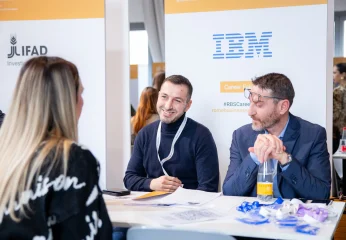
These questions were at the heart of a Company Presentation organised by the Rome Business School Career Service, featuring Alfonso Tricarico, Recruitment Officer at Médecins Sans Frontières (MSF) Italy. During the event, students gained insight into the role of HR in humanitarian organisations, from international recruitment to managing teams in demanding operational environments.
The presentation also explored career opportunities in the non-profit sector. Here, HR professionals do more than manage employees: they help organisations build the teams needed to deliver humanitarian assistance.
Human Resources work takes on particular characteristics in humanitarian organisations. Alongside traditional recruitment and administrative tasks, HR teams have another essential responsibility: identifying and preparing professionals for complex international environments.
Médecins Sans Frontières, for example, relies on people with a wide range of specialisations. In addition to medical and paramedical staff, its operations require professionals working in logistics, administration and technical roles.
As a result, recruitment cannot focus exclusively on formal qualifications. Professional experience remains essential, but motivation, language skills, intercultural awareness and the ability to manage stress also matter.
In this context, recruitment becomes a strategic function. The objective is not simply to fill a vacancy, but to build teams capable of working together, adapting to challenges and supporting humanitarian missions.
One of the central topics discussed during the presentation was the difficulty of attracting and retaining qualified professionals. Humanitarian organisations operate in a competitive labour market, where large multinational companies can often offer higher salaries.
For this reason, employer branding plays an important role. Communicating an organisation’s identity, mission and values helps attract professionals who also seek a sense of social purpose in their work. At the same time, employee benefits and development opportunities can strengthen motivation and encourage long-term commitment.
Another challenge concerns legal, administrative and logistical responsibilities. Organising the departure of an international worker can require quick solutions, especially when flight connections or consular services are unavailable.
In these situations, HR professionals must remain flexible while complying with applicable regulations, including relevant Italian legal requirements.
Continuous training is equally important. Humanitarian workers need up-to-date skills and appropriate preparation for the responsibilities they face. Investing in professional development therefore remains a fundamental part of workforce management.
During the Company Presentation, Alfonso Tricarico also discussed Médecins Sans Frontières’ recruitment procedures. Selection processes vary according to the position and working environment, with differences between head office roles and field assignments.
For head office positions, the process outlined during the event generally begins with an online application and CV assessment. Candidates may then complete a written test and attend an interview covering technical and behavioural competencies.
Recruitment for field assignments, however, requires a more detailed assessment of professional preparation. Following an initial screening, recruiters evaluate whether the candidate’s qualifications and experience match the requirements of the role.
These positions generally require at least two years of professional experience in the relevant technical field. Previous work experience in low-income countries may also be an advantage.
Qualifications, however, are only part of the assessment. Working in humanitarian environments also requires adaptability, collaboration and a willingness to operate in challenging conditions.
What qualities should professionals develop to pursue a career in the humanitarian sector? Technical preparation provides the foundation, but it is not enough on its own.
Among the most important qualities are teamwork, intercultural awareness, inclusivity and language skills. Humanitarian missions often involve professionals from different countries and disciplines who must work together towards shared objectives.
Stress management also plays an important role. When operational conditions and priorities change rapidly, professionals must remain focused and maintain constructive working relationships.
Equally important is an understanding of the organisation’s humanitarian principles and operating model. Understanding the mission of Médecins Sans Frontières means recognising the context in which people work and the responsibilities their roles involve.
For recruitment professionals, the challenge is to assess each candidate as a whole. A CV describes previous experience, but motivation, adaptability and the ability to work with others require equally careful consideration.
Alongside operational difficulties, the humanitarian sector offers meaningful opportunities for personal and professional development. For HR specialists, one of the greatest rewards is seeing the contribution of the people they recruit and support.
Identifying a professional for a mission, helping them prepare and supporting their development means contributing indirectly to the organisation’s objectives. The value of HR work therefore extends beyond completing the recruitment process.
Its impact also becomes clear when a professional’s skills support humanitarian activities. This connection between career development and social impact gives HR work in the non-profit sector a particularly meaningful dimension.
For students and professionals interested in this field, the first step is understanding how humanitarian organisations operate. Learning about their objectives, principles and working methods helps candidates evaluate opportunities and prepare for the sector’s requirements.
Following official recruitment channels and reviewing the requirements of available positions can provide useful direction. It is also important to develop expertise in international recruitment, people management and organisational processes.
The sector needs HR professionals who combine managerial knowledge with intercultural awareness. In this respect, specialised education can provide valuable tools for addressing people management challenges in international environments.
For those wishing to strengthen these skills, Rome Business School offers the International Master in HR & Organization, a programme focused on people management, HR strategy and organisational development.
The Company Presentation with Médecins Sans Frontières gave Rome Business School students an opportunity to explore a different perspective on HR careers. It highlighted a field where management expertise meets humanitarian commitment, showing how people management can contribute directly to an organisation’s mission.