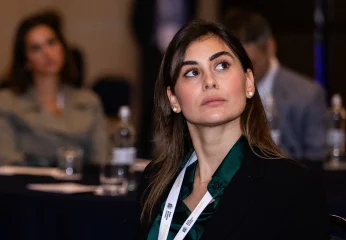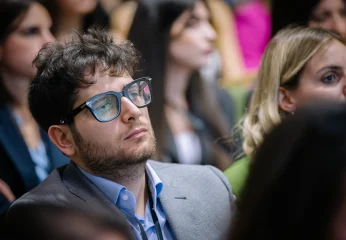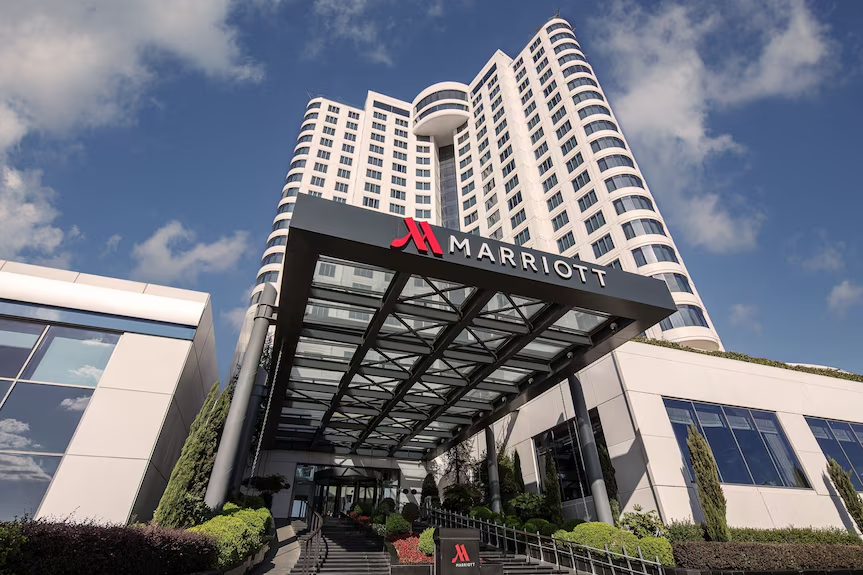
The Rome Business School hosted an exclusive company visit with Marriott International as part of the “Future Track” series within the Alumni community. This format brings students and professionals together to explore the trends shaping the future of business, innovation, and global industries.
The session was led by Gerardo Grasso, Senior Manager Digital Field Marketing EMEA, responsible for Italy and Malta. He works closely with some of the most iconic luxury brands in the portfolio, including The EDITION, St. Regis, The Luxury Collection, and JW Marriott.
During the talk, he shared a strategic and practical view of digital marketing in global hospitality, with examples from some of the most prestigious Italian hotels in the portfolio, including The Gritti Palace, The St. Regis Rome, and The St. Regis Venice.
In his role, Gerardo Grasso oversees the execution and evolution of digital marketing programs to ensure full alignment with Marriott global standards. His work requires strong cross-functional collaboration between global and regional teams.
Digital marketing at Marriott operates within a broader ecosystem that connects branding, distribution, and demand generation. This structure ensures consistency across markets while allowing flexibility for local execution.
A key concept discussed during the session was the “field” approach. The Digital Field Marketing team works directly in the markets through a network of more than 1,000 marketers across Europe, the Middle East, and Africa. Their goal is to accelerate localization and diversification of strategies while adding a strong local touch to global campaigns.
Core responsibilities include:
One of the strongest messages from the session focused on marketing effectiveness.
“We need to generate revenue. If not, it’s not marketing but just decoration.”
This statement highlights a key principle: modern marketing must go beyond aesthetics and creativity. It must deliver measurable business results and real demand generation.
As Grasso added:
“In hospitality, every strategy, piece of content, technology, or platform must translate into measurable outcomes.”
Digital marketing now sits at the intersection of storytelling, strategy, and data science. Intuition alone is not enough. Decisions must rely on evidence and performance metrics.
According to Grasso, one of the strongest growth drivers in digital marketing is the ability to create “content that converts” — content that inspires emotion and drives measurable results.
In this context, the website becomes the digital mirror of the hotel. Before investing in paid media, brands must build a strong digital foundation. Weak strategy, poor UX, or fragmented platforms lead to wasted budget, loss of trust, and broken booking journeys.
The hospitality marketing funnel includes three key stages:
Today, the customer journey is heavily influenced by entertainment, culture, and emotional storytelling. Marriott builds strategic partnerships and campaigns linked to global icons and events, including artists such as Celine Dion, Beyoncé, and Taylor Swift.
These partnerships, combined with media platforms and demand generation strategies, help convert engagement into bookings and revenue.
One of the most thought-provoking questions raised during the session was:
“In Venice, who are the real competitors of a hotel today? Another hotel or the endless stream of content on social media?”
This question reflects a major shift in the industry. Today, demand is driven mainly by emotions, while in the past travel decisions were more rational. The travel journey now starts long before the actual booking, shaped by images, videos, and narratives that influence desire and expectation.
However, this creates a new challenge: content saturation. The digital space is crowded, and standing out has become increasingly difficult. The main barrier today is not visibility, but uniqueness.
Originality has become a strategic asset. Hospitality brands must compete to remain emotionally distinctive in an environment where everyone tells a story.
Artificial intelligence is transforming marketing operations, especially in content creation and scalability. However, a clear distinction remains essential.
AI can produce content quickly, but only humans can create cultural meaning and emotional relevance.
The future of hospitality marketing depends on the ability to combine technology with authenticity, empathy, and cultural depth.
The session closed with a powerful statement:
“The future of hospitality marketing will not belong to the brands that speak the loudest, but to those that people emotionally inhabit long before their arrival.”
This vision highlights a clear direction for the industry: success will depend on the ability to build emotional connections well before the guest experience begins.