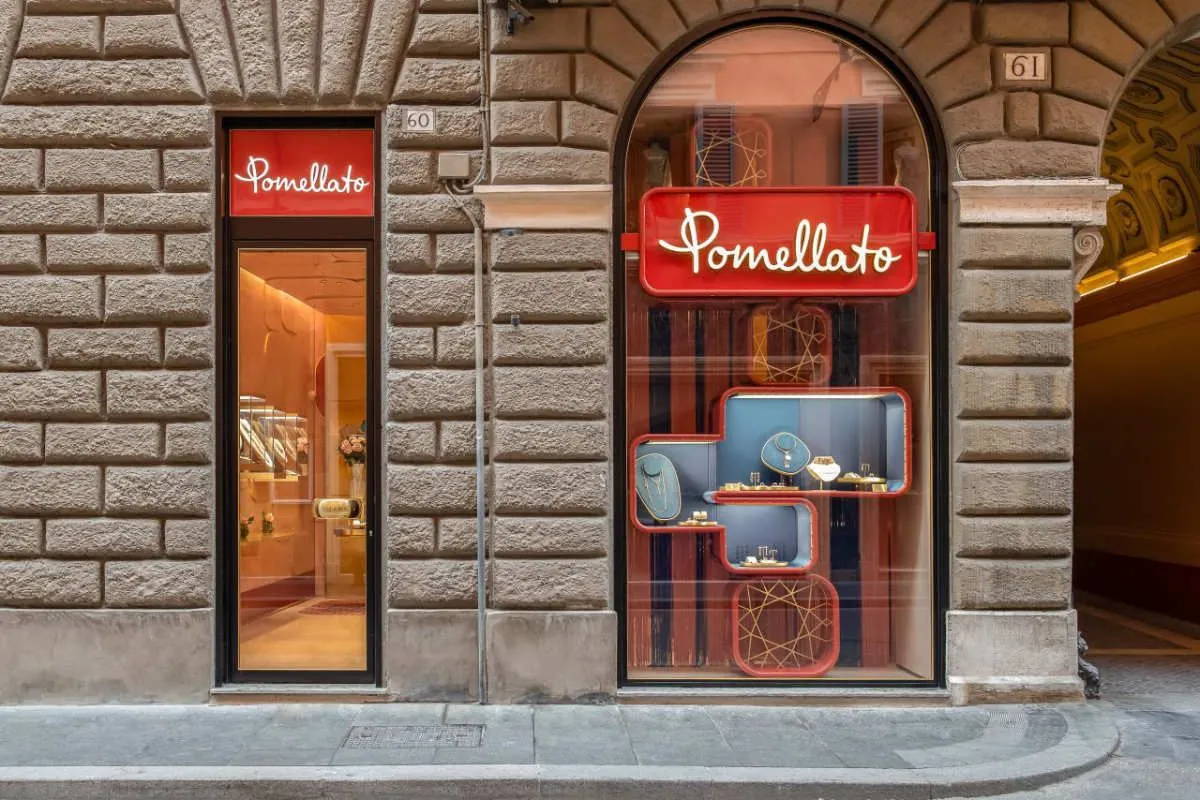
With over thirty years of experience between Bulgari and Pomellato, Flavio Dal Lago visited Rome Business School on July 17th for a company visit on a central topic in luxury management: how a brand’s distinctive identity is built, and above all, kept alive over time. Now Chief Commercial Officer at Pomellato, Dal Lago shared his take with students on an industry where brand consistency matters as much as — if not more than — the product itself.
In the luxury sector, the difference between a brand that lasts for decades and one that fades with a passing trend is rarely about the product itself. It’s about a set of distinctive elements — a manifesto, a recognizable aesthetic, a coherent story — that make up what marketing calls brand identity. Many luxury companies codify these elements into a “brand book”: a document that defines the brand’s DNA in a few sentences and guides every choice, from communication to product design.
During the session, Dal Lago used Pomellato’s brand book as an example, built around three key elements: goldsmithing craftsmanship, its Milanese roots, and a positioning tied to female empowerment. It’s a useful case for understanding how, in luxury, narrative consistency over time becomes a strategic asset in itself. Distinctive communication choices also play a role — Pomellato’s historic photography collaborations with names like Helmut Newton and Albert Watson helped shape this positioning, and are often harder to replicate than the product itself.
Not every luxury maison starts out as a brand. Many begin as manufacturing companies, focused on production rather than distribution, and only later face the shift toward becoming an international brand. That transition calls for very different skills than the ones the company started with: building a direct retail network, managing communication, and establishing a presence in international markets.
The case discussed during the company visit is a concrete example: a company that, for decades, invested mainly in creativity and production, only building a real distribution and international strategy over the past ten years. This dynamic is common across much of the sector. The shift from manufacturer to brand has a direct impact on levers like margin control, direct customer relationships, and the ability to expand into new markets.
Career paths in the luxury sector are rarely linear. Many professionals in senior roles today come from academic backgrounds and previous careers that have nothing to do with fashion or jewelry — economics, political science, engineering, strategic consulting. It’s an industry that values cross-functional skills more than early specialization.
Once inside the sector, career growth often comes through a wide range of roles rather than a single area of expertise. Among the most in-demand areas are:
It’s an example of how, in luxury, the ability to move across different functions often matters more than prior experience in a specific sector. That versatility is often what makes the difference for anyone building a managerial career in this field.
The case discussed during the company visit shows that a luxury brand’s success depends as much on creativity as on the ability to translate it into a consistent strategy of positioning, communication, and international growth. It’s a field that increasingly calls for professionals who can combine aesthetic sensibility with business vision.
If you’re interested in brand management, strategic positioning, or the internationalization of luxury brands, Rome Business School’s Master in Luxury & Fashion Management helps you develop exactly these skills. Contact our Admissions team to discover the programme that best fits your career goals.