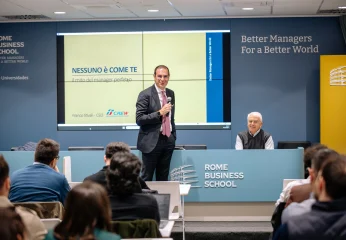
Building solid professional relationships is not optional; rather, it is one of the most effective tools for advancing a career. For this reason, students at Rome Business School had the opportunity to explore the value of networking through a dedicated workshop led by Eleonora Frezza, Executive Associate Manager at Michael Page, a global leader in talent recruitment. During the session, she highlighted how networking, when approached strategically, can become a genuine competitive advantage in today’s job market.
At the same time, networking goes far beyond casual encounters. Instead, it involves building long-term relationships, strengthening one’s professional reputation, and opening the door to mutually beneficial opportunities.
An effective professional network is diverse and includes contacts from different areas. For example, classmates and professors play a key role in exchanging knowledge and receiving academic guidance. In addition, current and former colleagues offer valuable insights into specific industries and organizational contexts.
Specialized recruiters often act as strategic intermediaries, opening doors to roles that may not be publicly advertised. Finally, digital peers connected through professional platforms such as LinkedIn help expand networks beyond geographical boundaries. By maintaining and nurturing these relationships, professionals can support continuous growth, enhance learning opportunities, and strengthen their overall reputation.
Networking offers tangible benefits:
During the workshop, it was also emphasized how important it is to adopt a proactive job search approach, as opposed to a reactive one. Rather than simply responding to job postings, professionals should actively seek opportunities, build their networks, and position themselves as ideal candidates before roles are publicly advertised. This approach provides access to the hidden job market, improves alignment with suitable positions, and opens doors for future career growth.
To build a strong network, it is useful to adopt practical strategies:
Reflecting on one’s personal brand also helps craft an effective elevator pitch, addressing questions such as: What are my values? What am I passionate about? What is my purpose? What brings me satisfaction?
Developing a professional network thoughtfully allows individuals to prepare for future opportunities while consolidating visibility, strategic skills, and long-lasting relationships. The first step is to communicate actively and collaboratively, listen attentively, and establish connections with confidence. Positive outcomes will naturally follow a methodical and proactive approach. Starting today means laying the foundations for tomorrow’s success.