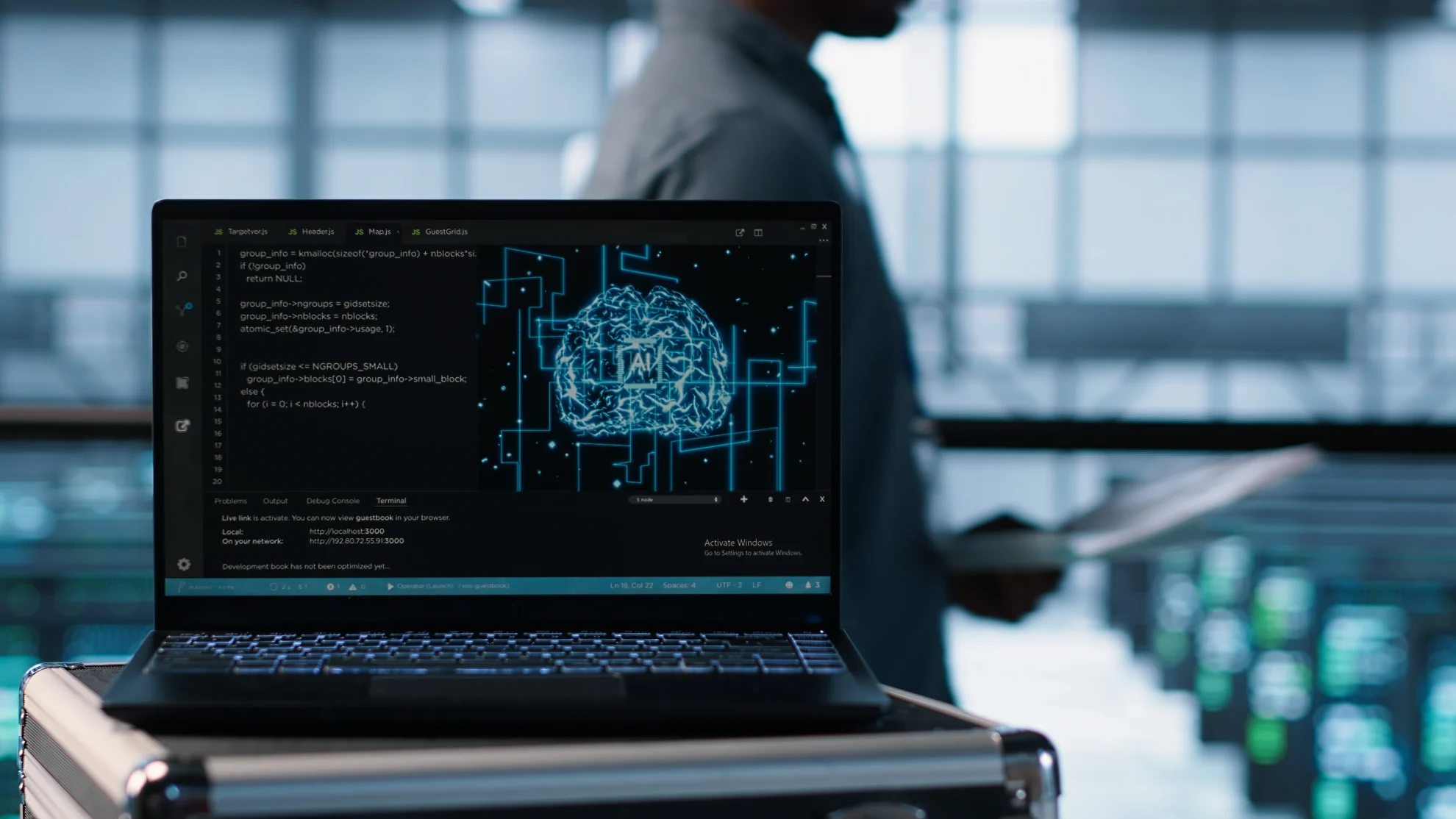
The global landscape is witnessing an unprecedented shift, placing Project Management at the heart of a perfect storm between technology and sustainability. In a recent “Future Track”, Alumni Workshop, Rome Business School hosted Asanda Nkungwana, Sustainable Innovation Leader at MTN Group, to discuss how AI and new collaboration models are redefining the leaders of tomorrow.
Nkungwana outlined a clear roadmap: by 2026, Project Management will evolve from manual coordination into a role of strategic enablement.
Traditional, static Gantt charts are becoming a thing of the past. By 2026, 88% of organizations will likely use AI to enable data-driven project management. The most significant change is the shift toward probabilistic planning.
Instead of relying on fixed, often unrealistic deadlines, Project Managers will use likelihood-based forecasts. This approach allows them to manage uncertainty and dependencies with surgical precision, turning risk from an “unforeseen obstacle” into a calculated variable.
According to Nkungwana, this evolution rests on three fundamental pillars that are fundamentally changing the daily workflow:
A key takeaway from the workshop was the automation of scheduling. AI tools now automate critical path recalculations and workload balancing, reducing manual effort significantly.
What does this mean for the Project Manager? AI is not a replacement but a force multiplier. The PM’s role shifts from “editing spreadsheets” to strategic decision leadership and high-level stakeholder communication.
In this “Great Reshuffle,” we see the emergence of the Super PM: a professional who combines AI capabilities with human leadership. To excel in this new era, technical skills alone are no longer enough. The new essential “skill stack” includes:
The AI-driven transformation is not a threat to Project Managers; it is an invitation to return to the heart of the role: leading change and delivering value. As Asanda Nkungwana emphasized,
“the future belongs to those who can integrate human intuition with digital augmentation.”