The Italian Trade Agency supports this growth through a network of over 70 offices in more than 60 countries. Every year, the public organization guides thousands of companies as they expand into new markets. This support specifically targets small and medium-sized enterprises (SMEs), which form the backbone of the Italian productive fabric.
The Agency provides practical tools, including participation in international trade fairs, business matching programs, and market analysis. They also offer export training and digital transformation initiatives. These services allow companies to reduce the risks of entering competitive environments and help them build solid growth strategies.
A central message of the visit was the shift in the concept of internationalization. It is no longer just about selling abroad. Today, companies must build lasting positions through market research, regulatory knowledge, and cultural adaptation. While the European Union remains the primary market for Italian firms, interest is growing in high-potential areas like Southeast Asia, the Middle East, and Africa.
At the same time, sectors such as advanced machinery, pharmaceuticals, agrifood, and design continue to drive global demand. These industries consistently reinforce the international reputation of “Made in Italy.”
Opening up to international markets is redefining the skills required of young professionals. Companies increasingly seek figures who can interpret geopolitical scenarios and work in multicultural environments. They look for candidates who integrate strategic vision with managerial expertise.
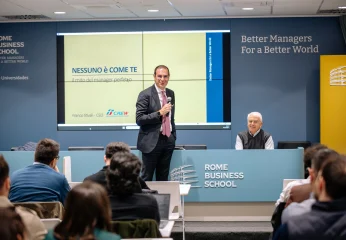
For the students, the meeting was a concrete opportunity to see how global trade trends translate into professional paths. It highlighted that internationalization is now a career accelerator as much as a business lever.
Experiences like this confirm the value of direct dialogue between the academic world and economic institutions. By engaging with organizations that promote the national system, Rome Business School strengthens an international educational model. This model stays attentive to market transformations.
Connecting students with global economy leaders provides them with better analytical tools. It prepares managers to operate in interconnected contexts, an essential requirement for anyone leading business growth in today’s competitive landscape.