The financial sector is currently undergoing a deep structural shift, moving away from product sales toward a model of holistic consultancy. For young professionals, becoming a Personal Financial Advisor is a chance to combine technical expertise with a high-level social purpose. This career path, however, requires more than just academic knowledge; it demands a blend of regulatory compliance and visionary leadership.
A Personal Financial Advisor operates as a certified architect of wealth. Their mission focuses on the effective management of savings, a process that transforms liquid assets into structured, long-term life projects. By aligning capital with specific life goals, the advisor ensures that wealth remains resilient against market volatility.
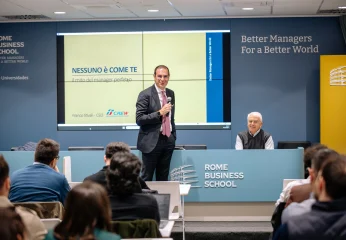
During a recent institutional meeting at Rome Business School, the collaboration with Fineco highlighted this evolution. Through this lens, the advisor is seen as a dedicated consultant who utilizes an analytical approach to maintain security within a client’s portfolio. This model does not merely track numbers; it protects the future of families through deliberate, data-driven planning.
Success in this profession is built on a foundation of continuous planning. Vanessa Guazzi, who has headed the Fineco Youth Project for over 15 years, recently shared her expertise with RBS students. She emphasized that a sustainable career in finance must stand on three non-negotiable pillars: Transparency, Innovation, and Efficiency.
These drivers are not just theoretical concepts but operational mandates. Transparency builds the trust necessary for long-term relationships, while innovation provides the tools to simplify complex markets for the client. For a young advisor, mastering these pillars means offering a value-added service that remains competitive in a digital economy.
To practice as a financial advisor, candidates must navigate a rigorous institutional roadmap. This journey typically unfolds across three critical stages:
In the modern era, career growth is linked to the ability to govern technological change. Fineco has demonstrated that technology, when used for efficiency, does not replace the human advisor but rather empowers them. By automating administrative tasks, advisors can focus their energy on high-value strategic consulting and deepening client relationships.
Ultimately, choosing this career path means becoming a manager of the financial future. It is a journey defined by professional integrity and a commitment to guiding clients toward informed choices. Through the synergy between Rome Business School and Fineco, the next generation is being prepared to lead the market with competence.