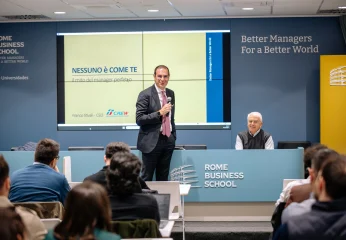
The Future Track Alumni Workshop at Rome Business School recently hosted Luigi Costa, Head of HR & Organizational Development at Intercultura. During the session, he explored a crucial yet often ignored aspect of career management: organizational health.
As professional environments grow more complex, modern leaders must evaluate workplaces through the lens of UN SDG 3 (Good Health and Well-being). This skill has now become a fundamental requirement for anyone entering the global job market.
Job negotiations usually focus on salary and titles, but we spend nearly 40% of our lives at work. Therefore, optimizing for financial gain alone is no longer a sustainable strategy for long-term success.
Workshop data highlights a serious crisis. Workplace stress causes 30% of heart disease cases, while mental health issues like anxiety result in 12 billion lost workdays every year. Ultimately, workplace health acts as a critical asset that prevents burnout and career stagnation.
Luigi Costa introduced the WHO Healthy Workplace Framework as a rigorous tool for candidates. We encourage professionals to evaluate four key dimensions before signing any contract:
Candidates must take an active role during interviews. Instead of waiting for answers, ask targeted questions to uncover the reality behind the corporate brand:
Rome Business School encourages students to use a Holistic Decision Matrix when comparing offers. A truly competitive proposal balances a fair salary with long-term health, growth opportunities, and overall quality of life.
Well-being is a shared responsibility. While organizations must create healthy spaces, professionals must choose environments that protect their integrity. Aligning your career with SDG 3 is a strategic investment in your future leadership.