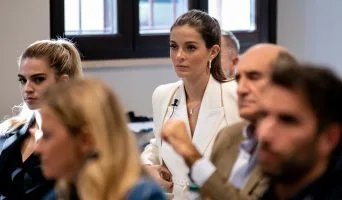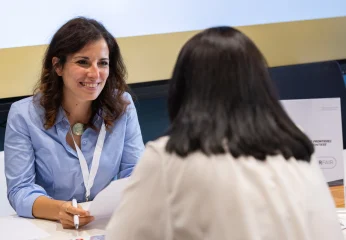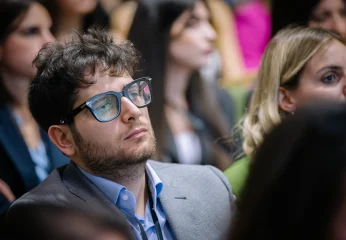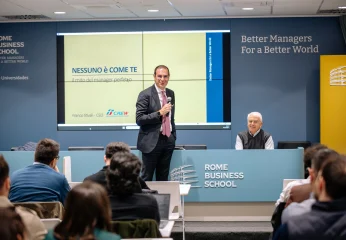
What does it mean to read the world while it’s changing? This was the central question of the meeting between Claudio Rossetti, Senior Economist and Director at Deloitte Economics, and the students of Rome Business School. It was a conversation rich in insights, where data, society and technology came together to offer a clear picture of the major forces shaping our time.
Rossetti opened with a simple but powerful idea: a trend becomes global when it crosses borders, industries and everyday habits, leaving a mark that affects everyone. Recognizing it is not enough—you must understand its scale, direction and links to other phenomena. Today, changes never move alone. They influence each other, overlap and accelerate.
Rossetti outlined the major areas that are currently shaping economies and societies:
Climate change, shifting regulations, priorities and investments
Demographics and new lifestyles, challenging healthcare, welfare and consumer habits
Digitalization and connectivity, now central to production processes and social relations
The energy transition, driven by regulation and new technologies
ESG criteria, which now define corporate value
The economic impact of health, often hidden but crucial for system sustainability
These trends, he explained, are not isolated silos. They form a network, and understanding the links between them is key to navigating complexity.
Rossetti stressed the importance of method. To read reality, you must measure, quantify and build scenarios. Only then can change become usable knowledge that guides policies, business strategies and investment decisions. Students clearly understood the message: economics is not a theoretical exercise. It is a lens that helps shape uncertainty.
The meeting with Deloitte is part of Rome Business School’s commitment to give students the chance to engage with professionals who deal with complexity every day.
The session showed that economic analysis, social innovation and technological transformation demand increasingly cross-disciplinary skills—skills that connect the dots, not just observe them.
Rossetti closed with a message that felt like an invitation: you don’t predict the future, you interpret it. Doing it well means learning to read what moves beneath the surface.
Rome Business School continues to cultivate this mindset, preparing professionals who can understand the present, anticipate what’s next and turn complexity into opportunity.