What shapes the strategy of a global food and beverage leader? How can professionals build a career in a company operating in 185 countries, with more than 2,000 brands and over 150 years of history?
Nestlé’s company presentation for Rome Business School students offered a clear answer. The session explained how the group manages people, culture, innovation, and organizational growth.
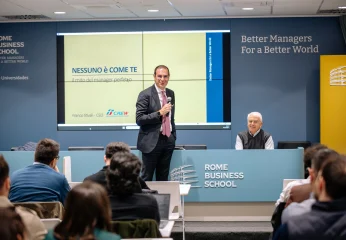
Vincenzo Summo, Head of Talent Italy & Malta, led the presentation. He showed how Nestlé combines global consistency with local talent development across different markets and roles.
Nestlé builds its vision around a clear goal: improving quality of life, today and in the future. This purpose guides daily decisions, investments, training programs, and consumer relationships.
The company promotes respect for people, diversity, work, and the planet. These values drive concrete actions in inclusion, welfare, and professional development.
Nestlé uses purpose as a strategic tool. It influences product innovation, supply chain choices, employer branding, and organizational models.
Nestlé operates on a global scale. The group employs 277,000 people and runs 337 factories in 76 countries. Its portfolio covers all major food and beverage categories.
This scale requires a flexible governance model. Nestlé protects its global identity while adapting to local markets.
Italy plays a key role in the group. Nestlé employs 5,000 people in the country, with 10 operational sites, over 70 retail locations, and more than 90 active brands. This presence supports a strong ecosystem of factories, research centers, offices, and multichannel distribution.
Nestlé operates across the full food system. The group manages brands for large-scale retail, clinical and hospital nutrition, out-of-home consumption, direct-to-consumer platforms, and petcare products.
This diversified portfolio helps Nestlé meet different consumer needs and maintain a strong pace of innovation.
The company focuses on every moment of consumption. It invests in research and relies on a global supply chain to ensure quality, safety, and sustainability.
Nestlé’s culture also shapes the employee experience. Key initiatives include Nestlé Baby Leave, which extends paid leave to the second caregiver, and Pets at Work, which allows employees to bring dogs to the office.
The company also introduced the F.A.B. model (Flexible, Adaptable, Balanced). This approach supports productivity while improving work-life balance.
These policies strengthen employee well-being and enhance Nestlé’s reputation as an employer. Flexibility and inclusion now play a critical role in talent attraction.
Skills development remains a top priority. In 2024, Nestlé delivered more than 90,000 hours of training. Programs focused on leadership, safety, technical skills, and soft skills.
Upskilling and reskilling support employees in a fast-changing industry.
According to the World Economic Forum, future skills include analytical thinking, digital literacy, leadership, creativity, and empathy. Nestlé already integrates these skills into its learning strategy. The company also invests in AI, data science, cybersecurity, and sustainability training.
Nestlé promotes flexible career paths. The company encourages international experiences, role changes, continuous learning, and both vertical and horizontal mobility.
This model supports growth without rigid career structures. Employees build their careers through adaptability and continuous development.
This approach reflects modern labor market trends. Skills matter more than titles, and long-term potential guides career decisions.
Nestlé invests strongly in young talent through the YEP – Youth Entrepreneurship Platform. The program involves students and graduates in real business challenges with Nestlé brands.
One recent example is the FITNESS project, which engaged hundreds of students. Finalist teams presented their ideas directly to the leadership team at Nestlé headquarters.
YEP connects innovation, creativity, and talent scouting. It also strengthens Nestlé’s relationship with younger generations.
Nestlé closed the presentation with practical advice for candidates. Applicants should research the company, follow its projects, and prepare a clear CV and a consistent LinkedIn profile.
The selection process includes three steps:
Interview with Talent Acquisition
Technical interview with the business team
Final feedback based on skills, motivation, and growth potential
Nestlé shared a clear view of its strategy with Rome Business School students. The group builds global leadership through people, culture, and innovation.
Its talent model connects purpose, welfare, continuous learning, and future skills. This approach helps Nestlé compete and grow in a fast-evolving food and beverage industry.