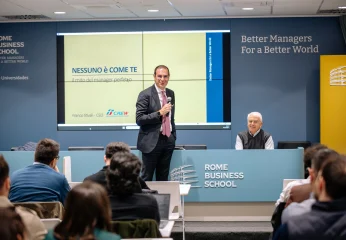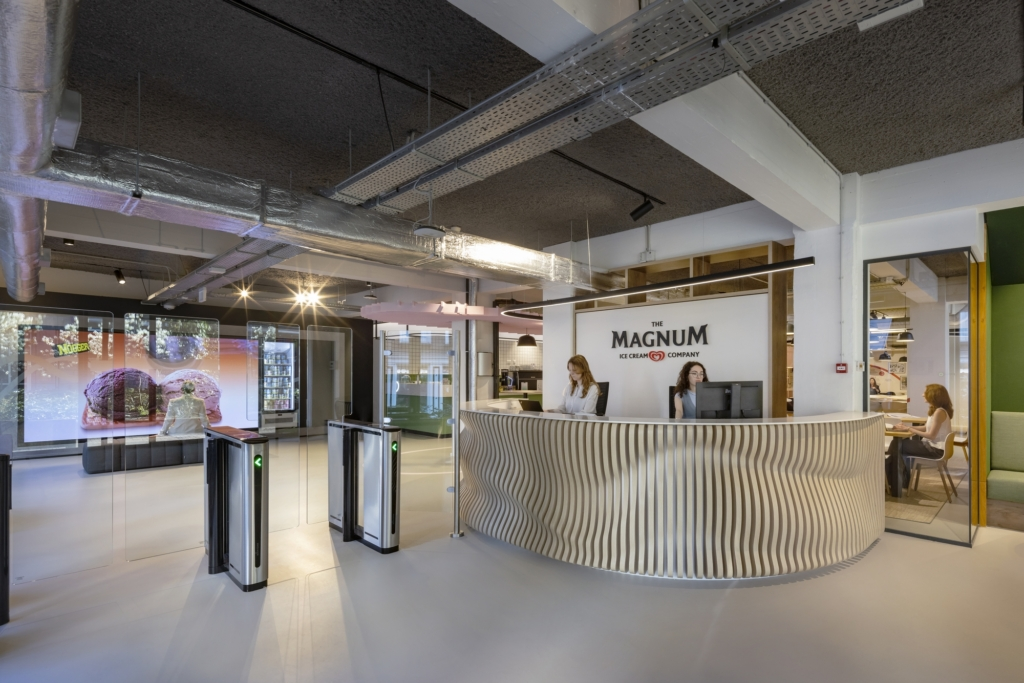
Understanding how a global brand is created and evolves means looking beyond the product to examine strategic choices, organizational culture, and talent development models. With this perspective in mind, students from Rome Business School met with the team from Magnum for a session dedicated to exploring how a company has transformed ice cream into a globally recognized brand experience.
During the meeting, participants analyzed the key drivers behind the company’s growth. Today operating as The Magnum Ice Cream Company, an independent entity fully focused on the ice cream category, the business is part of a group valued at approximately €7.9 billion, with a strong presence across major international markets.
A Company Built on Heritage and Specialization
One of the central themes discussed was the company’s industrial positioning. It defines itself as one of the leading global players in the ice cream industry, drawing on more than a century of expertise rooted in the history of Wall’s and the progressive development of iconic brands.
Tracing the company’s timeline—from the 1920s motto “we take pleasure seriously” to the launch of Magnum at the end of the 1980s—highlighted how growth has been driven by a combination of product innovation, international expansion, and the ability to anticipate evolving consumer trends.
This historical perspective demonstrated that the ice cream industry, often perceived as a mature market, continues to evolve through new branding strategies, experiential marketing, and product differentiation. Innovation in FMCG (Fast-Moving Consumer Goods) remains a decisive competitive lever.
Purpose and Culture: Turning Everyday Moments into Memorable Experiences
Significant attention was given to the company’s corporate purpose, summarized in the ambition to bring “the power of ice cream to more people, in more places, and in new ways.” The brand’s identity is closely tied to its ability to transform simple, everyday moments into premium, memorable experiences.
Core operating principles include attention to detail, speed in decision-making, and a strong drive for innovation. Together, these elements shape a corporate culture that balances performance and creativity—an essential combination in the highly competitive global FMCG sector.
This cultural dimension is not only critical for market positioning but also for attracting and developing talent in an industry where agility, adaptability, and global mindset are increasingly important.
Careers at Magnum: Recruiting and Talent Development in FMCG
For students, one of the most valuable parts of the session was the deep dive into the recruitment process. The company outlined a structured selection journey that begins with role definition and job posting, followed by CV screening, interviews, and final feedback communication.
Recruitment is seen not merely as an evaluation process, but as an opportunity for dialogue with potential candidates. Transparency, clarity, and timely feedback are emphasized throughout every stage.
The discussion also highlighted the growing importance of soft skills—such as the ability to work in international environments, adaptability to change, and cross-functional collaboration—for those aiming to build a career in the FMCG industry.
Industry Innovation, Sustainability, and Future Career Paths
The meeting also provided broader insights into the transformation of the ice cream and consumer goods sector. Key trends include increased focus on sustainability, responsible sourcing, and the development of agile organizational models capable of responding quickly to shifting market dynamics.
For students, engaging directly with industry professionals offered a concrete understanding of how strategic vision translates into operational decisions and career opportunities. The session underscored the value of integrating long-term strategy with strong execution capabilities—an essential skill set for future business leaders.
Strengthening the Link Between Education and Business
Initiatives like this confirm the role of Rome Business School as a bridge between academia and industry. By fostering dialogue with global brands such as Magnum, the school enables students to connect theoretical learning with real-world business challenges.
Through direct interaction with international companies, participants gain a deeper understanding of the dynamics shaping global organizations—enriching their academic journey with practical, applicable insights into branding, innovation, and talent strategy in the evolving ice cream industry.