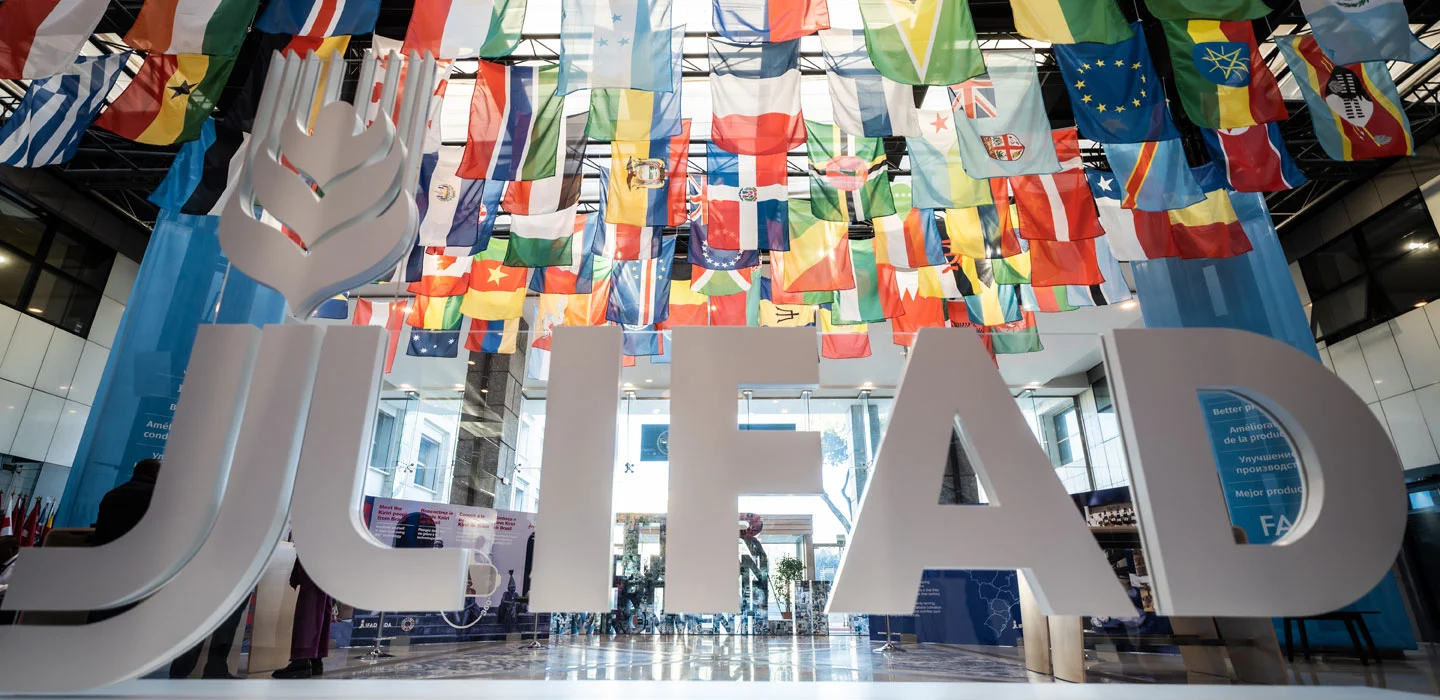
The fight against poverty and hunger also depends on financial investment, access to resources and the creation of economic opportunities for rural communities. This is the mission of the International Fund for Agricultural Development (IFAD), a specialised agency of the United Nations and an international financial institution headquartered in Rome. IFAD was the focus of a dedicated event at Rome Business School exploring sustainable development and career opportunities within the UN system.
The session was led by Joy Rostrata, HR Analyst in IFAD’s Talent Acquisition Team and a Rome Business School alumna, alongside other professionals from the organisation. The event explored IFAD’s operating model, its impact on rural communities and the different pathways to building an international career, giving students first-hand insights into the skills and experience required to work in international development.
Founded in 1977, IFAD stands out within the United Nations system for its dual role as both a specialised agency and an international financial institution. Through loans, grants and investment programmes, the organisation supports economic development in rural areas, addressing issues such as food security, access to finance, climate change adaptation and social inclusion.
To illustrate the scale of its activities, Joy Rostrata shared some of the results achieved through IFAD-funded projects. According to the figures presented during the event, 92 million people have benefited from ongoing investment projects, with women accounting for 51% of participants and young people for 25%. Among the projects assessed, participants recorded an average income increase of 34%, while 1.1 million households adopted climate-resilient technologies.
These figures demonstrate how rural development requires initiatives that combine financial resources, technical expertise and social transformation. Unlike emergency humanitarian interventions, IFAD primarily operates through long-term investment programmes, developed in partnership with governments and with the involvement of local communities.
The presentation also highlighted the role of small-scale agricultural producers, who make a significant contribution to global food production while facing challenges related to access to credit, infrastructure and markets. In this context, investment becomes a tool for increasing productivity, supporting rural entrepreneurship and making communities more economically resilient.
IFAD’s impact extends beyond the agricultural sector: rural development is closely connected to natural resource management, access to infrastructure and communities’ ability to adapt to environmental and economic changes.
Particular attention was given to climate change, which directly affects agricultural productivity and the living conditions of the most vulnerable populations. Initiatives may include introducing drought-resistant crops, improving water resource management and sharing technical knowledge with farmers and local communities.
Another area of intervention concerns migrant remittances, which represent an essential source of income for many families in developing countries. IFAD also works to promote more accessible financial services and reduce the costs of international money transfers, helping communities make more effective use of the financial resources they receive.
The importance of cooperation between countries in the Global South also emerged during the discussion, particularly through the exchange of experiences, technologies and solutions already tested in similar contexts. This approach helps enhance local knowledge and adapt development initiatives to the specific economic, environmental and social characteristics of each territory.
The second part of the event focused on the professional opportunities offered by the organisation, providing an overview of the main entry pathways available to students, recent graduates and experienced professionals.
Among these opportunities are IFAD’s internship programmes. Internships represent an initial opportunity to gain experience within the United Nations system and cover several areas, from human resources and finance to auditing and technical activities related to international development. The programme offers paid internships initially lasting six months, with the possibility of a further six-month extension.
For young professionals with previous work experience, another pathway is the Junior Professional Officer (JPO) Programme. This programme provides the opportunity to gain practical experience in international development through assignments generally lasting two years and funded by sponsoring governments. The requirements outlined during the event include an advanced university degree, at least two years of relevant professional experience and specific age limits, which vary depending on the agreements with participating governments.
Joy Rostrata also explored consultancy opportunities, aimed at professionals who can provide specialised expertise and technical support across the organisation’s different functions. These positions include both junior and senior assignments, with requirements varying according to the level of experience.
Together, these pathways reflect the diversity of professional profiles sought by IFAD. In addition to experts in agriculture and sustainability, the organisation requires skills in economics, finance, programme management, technology, communication and human resources.
What makes a candidate competitive when applying to an international organisation? The final part of the event provided practical guidance on recruitment processes, highlighting the importance of thorough preparation and motivation aligned with IFAD’s institutional mission.
Applications must be submitted through the organisation’s official Careers portal, with all required information completed in full. Simply uploading a CV is not enough: candidates must also fill in the sections covering their academic background, professional experience and acquired skills.
Personal motivation emerged as one of the most important factors in the candidate evaluation process. Understanding IFAD’s mandate, becoming familiar with its activities and identifying the connection between one’s academic background and the organisation’s needs can help candidates build a stronger and more targeted application. Volunteering experiences, university projects and previous professional activities can also demonstrate relevant interests and skills.
The discussion also explored competency-based interviews, which assess candidates’ abilities through concrete examples related to the requirements of each position. Alongside technical knowledge, important qualities include the ability to collaborate in multicultural environments, adaptability and the capacity to contribute to shared objectives.
Joy Rostrata’s own professional journey, from her management education at Rome Business School to her current role in IFAD’s Talent Acquisition Team, provided a direct example of the connection between academic experience and career opportunities within international organisations.
For Rome Business School students, the event offered a practical insight into how managerial, financial and organisational skills can be applied to global challenges. Working in international development means helping transform resources and knowledge into tangible results through careers that combine technical expertise, intercultural collaboration and a commitment to supporting communities.