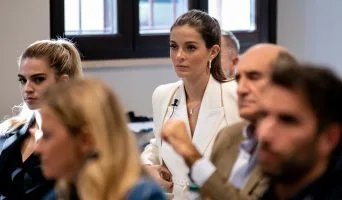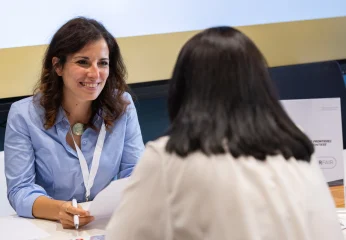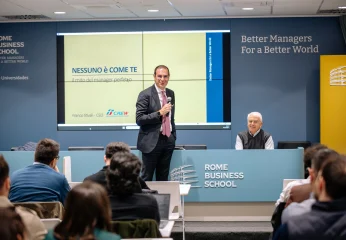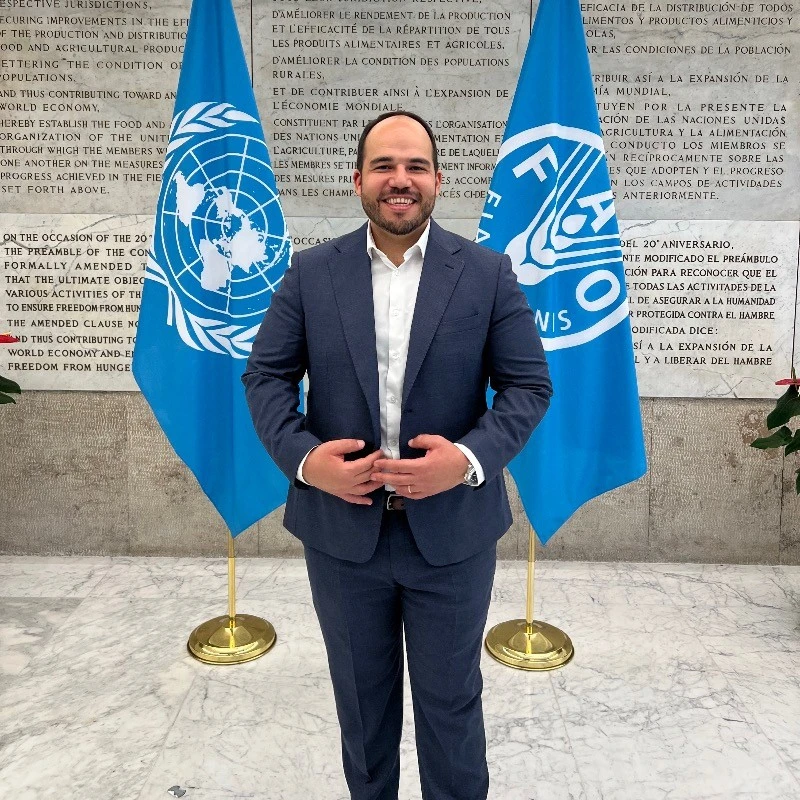
As part of the Rome Business School Career Toolkit initiative, students had the opportunity to take part in an inspiring talk with Francisco Martinez, Rome Business School alumnus and now Multimedia Producer and Communication Strategy Specialist at FAO.
The session offered students a valuable opportunity to hear directly from an RBS graduate who has successfully built an international career within the United Nations system.
During the session, Francisco shared what a typical day at FAO looks like. His work alternates between creative development, strategic planning, and managing cross-regional collaborations. Working in a truly international environment also means constant networking and exchanging ideas with colleagues from all over the world.
“It’s a dynamic role,” he explained, “where creativity and strategy must always work together.”
Francisco retraced his professional journey, highlighting how is background and experiences after Rome Business School helped shape his career path. He began by supporting a national communication network in El Salvador, building a solid foundation in storytelling before expanding into advertising and freelance work.
A turning point came when a friend invited him to Italy for a film festival, where he worked on a small project presented at the Venice Film Festival. Thanks to a journalist pass, he was able to network, create meaningful professional connections, and eventually relocate to Italy. Around ten years ago, he transitioned into international development communication, collaborating with IFAD and FAO, and later becoming a partner at Studio Capta.
Reflecting on his journey, Francisco shared a key takeaway with students:
“Luck exists, but you have to be prepared when it arrives.”
One of the key topics discussed was how to create content that connects with diverse audiences. According to Francisco, effective communication across cultures starts with human-centered storytelling.
He encouraged students to approach communities with respect, curiosity, and authenticity, focusing on lived experiences rather than abstract ideas or over-theorized concepts.
Among the projects that most deeply impacted him, Francisco highlighted the Food Heroes documentaries. These stories not only transformed the lives of the protagonists but also inspired many others, reinforcing the power of storytelling as a driver of social change.
For Francisco, this project reaffirmed that stories, when told responsibly, can influence behaviors and mindsets far beyond the screen.
Francisco also addressed a common misconception about the sector: the idea that multimedia and documentary work rely solely on the “magic of cinema.” In reality, communication in international development is highly strategic and must align with clear development objectives while remaining faithful to the communities portrayed.
To conclude the session, Francisco shared practical advice with students and alumni. He encouraged them to keep moving forward, say yes to opportunities, and continuously build an authentic portfolio that reflects their values.
He also stressed the importance of embracing new technologies and using time wisely:
“Time doesn’t stop, so you shouldn’t either. Invest it in what truly matters, because your future will be shaped by it.”