How are artificial intelligence, digital health and data interoperability reshaping European healthcare? Insights from Marko Mohoric of Angelini Pharma, featured in the November 20 episode of Alumni RBS Innovation Bites.
The future of healthcare in Europe will be shaped by the convergence of different technologies rather than by a single innovation. This was one of the key messages shared by Marko Mohoric of Angelini Pharma during the November 20 episode of Alumni RBS Innovation Bites, which explored the opportunities and challenges that artificial intelligence (AI) and digital transformation are bringing to the healthcare industry.
The real question is no longer which technology will have the greatest impact, but how different innovations can work together to improve healthcare for patients, professionals and institutions. Digital health devices, data interoperability and AI must be considered complementary elements of a more connected and efficient healthcare ecosystem.
According to Mohoric, the digital transformation of healthcare relies on three essential elements: data, interoperability and artificial intelligence.
First, data must be accurate, clear and timely. Increasingly generated through wearable technologies and digital health devices, it provides valuable information about patients’ health. However, collecting data is only the first step.
Interoperability is equally important. Different systems, from personal devices to healthcare platforms and electronic clinical records, must be able to communicate and exchange information. Without this connection, valuable data risks remaining isolated.
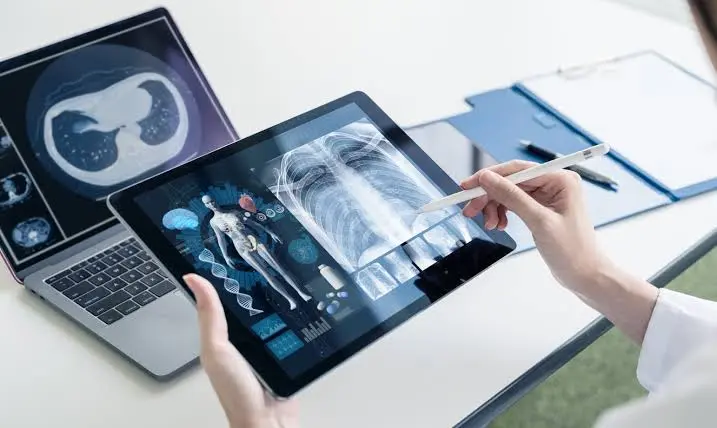
Finally, AI can transform information into meaningful insights by analysing data, identifying patterns and supporting healthcare decisions.
This also raises an important question: who should interpret health information? Should patients play a more active role in understanding their own data, or should this responsibility remain primarily with healthcare professionals? The challenge is to make information genuinely useful in everyday clinical practice.
One of the main challenges for digital health startups is moving beyond the consumer market and becoming part of established healthcare systems.
Many companies rely on subscription models alongside device sales. Removing these subscriptions without alternative funding mechanisms could threaten their business models and limit their ability to attract investment.
Several solutions could make digital health services more accessible and sustainable. National healthcare services could finance these solutions, reimbursement mechanisms could support patient access, or public frameworks could facilitate their integration while ensuring data protection and interoperability.
For digital healthcare to reach a wider population, a stronger partnership between private innovation and public healthcare systems will be essential.
Artificial intelligence raises an important question for Europe: is regulation a competitive advantage or an obstacle to innovation?
Europe considers regulation essential to trustworthy technological development, but finding the right balance between protecting citizens and supporting innovation remains challenging.
As Mohoric highlighted, the debate has both business and ethical dimensions. Countries with fewer restrictions may develop and implement AI technologies more quickly. However, technology also requires clear boundaries defined by laws, values and cultural principles.
Europe’s challenge is therefore to create a regulatory framework that supports innovation while ensuring safety, data protection, quality and accountability.
When rules are clear, predictable and proportionate to risk, regulation can actually accelerate adoption by building confidence among patients, healthcare professionals and institutions.
In healthcare, trust is not simply a regulatory requirement. It is a fundamental condition for innovation to succeed.
The development of AI in healthcare also highlights the differences between international approaches to technological innovation and regulation.
For Europe, this is particularly relevant to clinical evidence and evidence-based medicine. The quality of medical insights depends on the accuracy and volume of available data, as well as the ability to analyse it effectively.
Patients must feel confident that their health information is being used responsibly and securely. Without this trust, healthcare systems cannot fully benefit from the opportunities offered by large-scale data analysis.
Trust may therefore become one of Europe’s most important competitive advantages, allowing innovation, data protection and public confidence to reinforce one another.
Another issue discussed by Mohoric was the difficulty of moving healthcare innovations from successful pilot projects to large-scale implementation.
Many startups develop promising technologies and demonstrate their potential through pilot programmes, but this does not guarantee their adoption in everyday clinical practice.
The main challenges often emerge after the initial funding stage. Companies need sustainable business models and clear strategies to scale their solutions, since technological innovation alone is not enough.
Three questions are particularly important: Who will pay for the solution? Who will integrate it into clinical workflows? Who will be responsible for its long-term use?
These considerations should be addressed from the beginning of a project, rather than after the pilot phase. The ability to turn successful experiments into sustainable solutions will be crucial for Europe’s healthcare innovation ecosystem.
While AI will increasingly support medical professionals, technology will not replace the importance of human interaction.
One of the most interesting concepts raised during the discussion was hybrid empathy: an approach in which technology and human expertise complement one another.
Artificial intelligence can process large amounts of information, identify patterns and support diagnostic decisions. However, information alone cannot provide meaningful healthcare.
Doctors should focus on the qualities that make their role irreplaceable: understanding patients, recognising vulnerability, communicating with empathy and building trust.
The doctor of the future will need to combine technological knowledge with strong interpersonal skills. AI can support clinical decisions, but the relationship between doctors and patients remains fundamentally human.
Rather than fearing artificial intelligence, healthcare professionals should learn to work alongside it, understanding both its potential and its limitations.
The future of European healthcare will depend on bringing together technology, data, artificial intelligence, regulation and human expertise.
Digital devices can generate valuable information, interoperability can connect healthcare systems, and AI can transform data into insights. However, their potential can only be fully realised through sustainable business models, effective regulation and integration into clinical practice.
Ultimately, the goal is not to replace human expertise with technology, but to create a healthcare system in which both work together to improve patient outcomes.
These topics were at the heart of the November 20 episode of Alumni RBS Innovation Bites, the Rome Business School initiative that brings Alumni and industry experts together to share experiences and explore the innovations shaping the future of business and society.
For professionals and students interested in these developments, understanding the relationship between healthcare, innovation, business strategy and management is increasingly important.
The International Master in Pharma and Health Management at Rome Business School offers the opportunity to develop this knowledge and gain a broader understanding of the pharmaceutical and healthcare industries and the transformations shaping their future.