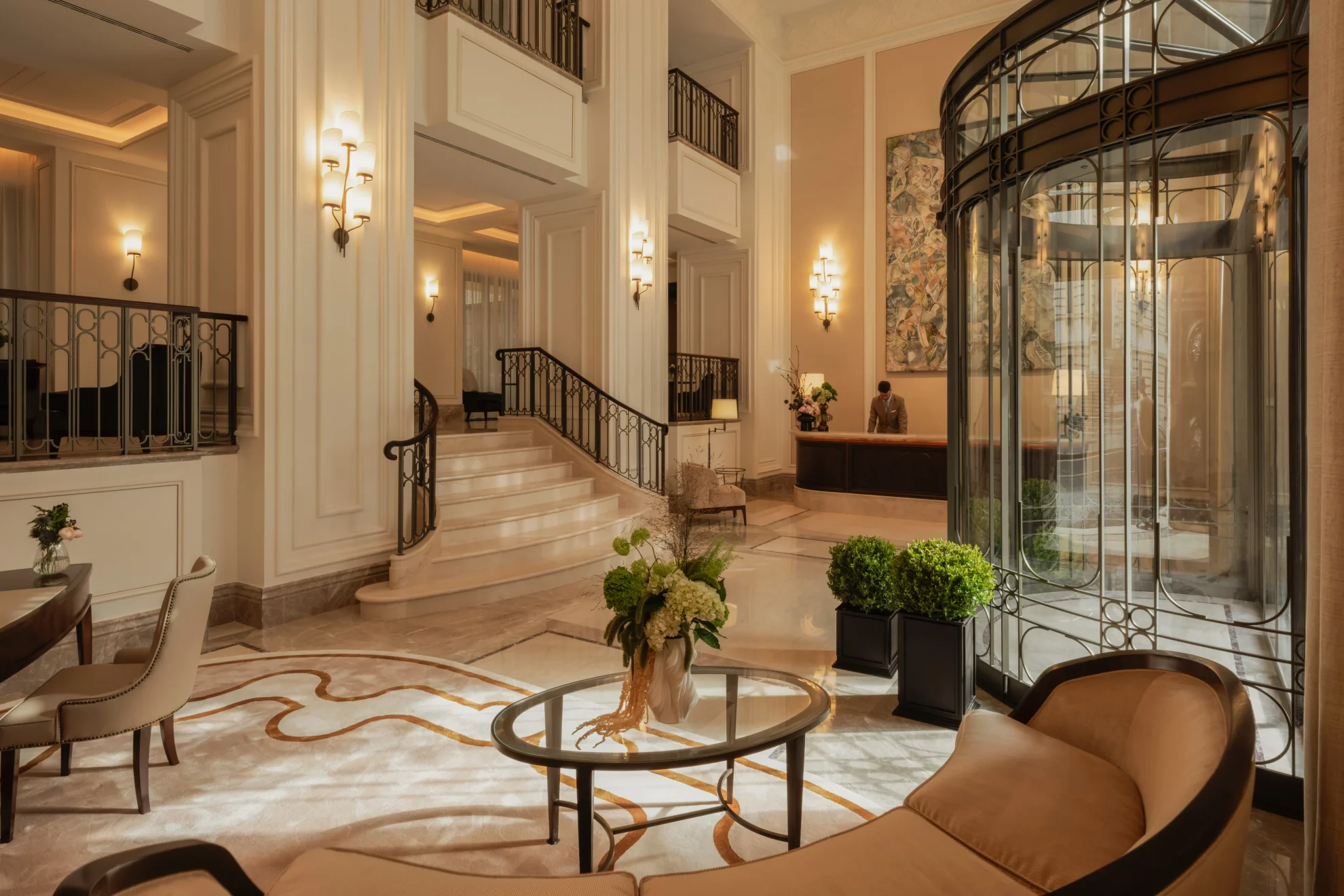
What makes a five-star hotel experience truly exclusive? Excellent cuisine, elegant interiors and impeccable service are no longer enough to stand out in today’s highly competitive luxury hospitality market. Hotels must understand guest expectations, anticipate their needs and create personalized experiences.
This was the central theme of a meeting with Gabriele Santolamazza, F&B Operations Manager at Corinthia Rome. During the event, he shared his professional experience with the Rome Business School community and discussed the main transformations shaping the luxury hospitality industry.
Through the example of Corinthia Rome, which opened in February 2026 in the heart of the Italian capital, Santolamazza explored the challenges of Food & Beverage management, the role of people in shaping the guest experience and the opportunities that innovation brings to the hotel industry.
Located in Piazza del Parlamento, Corinthia Rome occupies a historic building that once belonged to the Bank of Italy. The hotel marks the international group’s first opening in Italy. With 60 rooms and suites, it combines high-end hospitality with a dining concept developed in collaboration with chef Carlo Cracco.
The project features several distinctive dining venues. Piazzetta offers an all-day dining experience inspired by Italian conviviality. Viride by Carlo Cracco serves contemporary fine dining. Ocra, meanwhile, welcomes guests into an intimate and sophisticated cocktail bar.
Santolamazza joined the team before the hotel’s opening. He shared the challenges of launching a luxury property, from designing operational processes and training staff to balancing international hospitality standards with the chef’s culinary identity.
One key topic concerned the hotel’s market positioning. Guests can choose from an increasing number of luxury hotels and fine dining restaurants. High prices and premium ingredients alone no longer create a competitive advantage. Guests assess the entire experience, from brand reputation to the quality of every interaction with staff.
One of the meeting’s main themes was the evolution of consumer expectations. According to Santolamazza, modern luxury does not necessarily mean formal perfection. It means making every experience feel personal and distinctive.
The guest journey starts long before arrival at the hotel or restaurant. Brand reputation, word of mouth, digital communication and the booking process all shape initial expectations.
Even an overly complicated booking procedure can damage the guest experience. Tools designed to protect business interests can sometimes create unnecessary obstacles for customers.
Once guests arrive, they expect a welcome that reflects the brand’s promises. More importantly, they want a service that adapts to their individual needs.
Santolamazza illustrated this concept with practical examples. A guest attending a business dinner may prefer discreet service and minimal interruptions. An international traveller, on the other hand, may appreciate conversations with staff, recommendations about Rome and insights into the restaurant’s culinary offering.
These two situations require very different approaches. In both cases, service quality depends not on rigid procedures but on the staff’s ability to understand the context and respond accordingly.
Personalization also extends to the final moments of the experience. A genuine farewell, arranging a taxi or recommending the next stop on a guest’s journey can strengthen the relationship and leave a lasting impression.
Personalized service represents one of the main management challenges in luxury hospitality. Hotels must build teams that deliver consistently high standards while maintaining spontaneity and empathy.
Santolamazza highlighted the importance of technical knowledge. Staff must understand menus, ingredients, allergens and service techniques. However, technical expertise alone is not enough.
Employees must also read situations, understand guest preferences and adapt their approach whenever necessary.
International hospitality standards provide an essential operational framework. However, teams also need sound judgment and strong interpersonal skills. Standardization ensures consistency, while personalization makes the experience memorable.
Achieving this balance requires a structured training process. During the meeting, Santolamazza described an approach based on progressive learning objectives.
The first step involves developing in-depth knowledge of the food and beverage offering. Staff then master service sequences and procedures. Finally, they strengthen their hospitality skills and ability to build meaningful relationships with guests.
Training therefore becomes an integral part of the hotel’s operational strategy. It requires time, consistency and leadership that supports employees throughout their professional development.
Beyond service quality, luxury hospitality businesses can build a strong market position through distinctive spaces and memorable experiences.
Santolamazza explored the relationship between hospitality and social media. Photos and content shared by guests can significantly increase a hotel’s or restaurant’s visibility. In this context, physical spaces also become powerful communication tools.
A distinctive architectural feature, an original interior design concept or a recognizable culinary detail can strengthen brand positioning.
The goal is to create such a strong identity that people can recognize a hotel or restaurant from a single photograph, even without seeing its name.
This approach requires careful experience design. Architecture, food and beverage, service and communication must work together to create a consistent brand image.
However, creativity must also meet clear business objectives. As the discussion highlighted, an innovative idea creates real management value only when the team can turn it into an operational project. A solid business model and measurable goals must support every initiative.
Gabriele Santolamazza’s professional journey also offered insights into career opportunities in the hospitality industry.
He started working as a waiter at the age of 17. Since then, he has built his career through operational and management positions at several hotels and fine dining restaurants, both in Italy and abroad.
One of his most significant professional experiences took place at Hotel de Russie in Rome, part of Rocco Forte Hotels. There, he worked as Restaurant Manager before joining Corinthia Rome in 2025.
Moving to a newly opening hotel brought a different set of management challenges. Established businesses already have operational procedures and structured systems. A new hotel, by contrast, must gradually build its processes, teams and working methods while maintaining high quality standards and financial sustainability.
For Santolamazza, this environment also offers greater opportunities to shape the project directly, test new solutions and take on strategic responsibilities.
The meeting with Rome Business School presented a broader vision of luxury hospitality. It moved beyond the traditional idea of exclusivity and highlighted the importance of management skills, people development and innovation in the guest experience.
In an industry where technical excellence has become a basic requirement, the real challenge lies in making every guest interaction distinctive. This is how luxury hotels can create lasting value for both their customers and their brands.