The way we produce and consume goods is changing — and it has to. For decades, the global economy has operated on a linear model: take resources from the earth, manufacture products, and discard them when they’re no longer useful. This approach has fuelled economic growth, but at a significant cost to the environment and to the long-term availability of natural resources. The circular economy offers a different path — one where materials are kept in use, waste is designed out, and nature is actively restored.
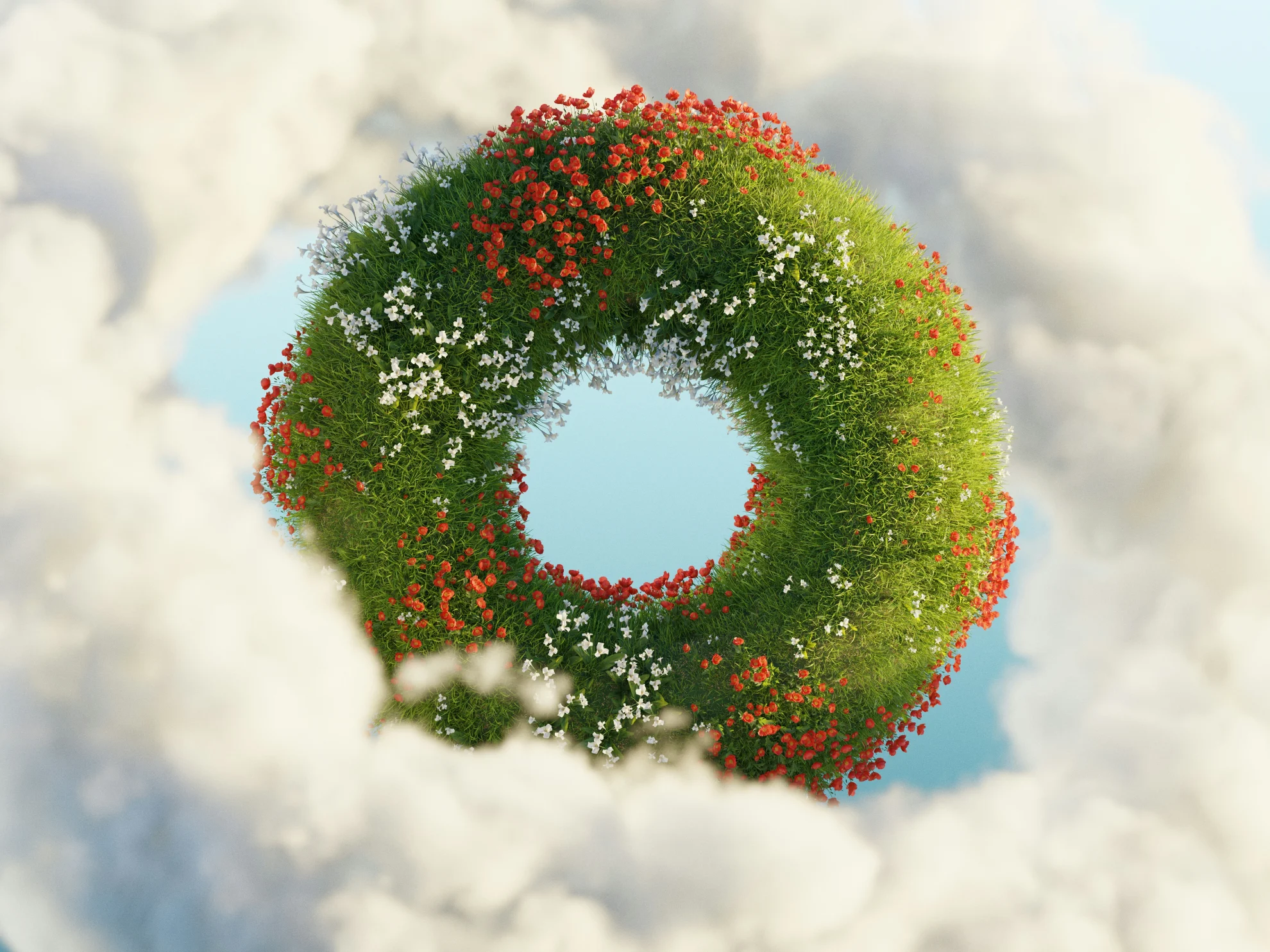
A circular economy is a system where materials never become waste and nature is regenerated. Products and materials are kept in circulation through processes like maintenance, reuse, refurbishment, remanufacturing, recycling, and composting. Rather than following a straight line from production to disposal, resources move in continuous loops — retaining their value for as long as possible.
The shift requires rethinking the entire supply chain: how products are designed, how they are used, and what happens to them at the end of their life. New products are designed for quality, longevity, and disassembly. Recycled materials replace virgin inputs wherever possible. And business models evolve to prioritise access and service over ownership.
Underpinned by a transition to renewable energy and sustainable materials, the circular economy is a resilient system that benefits businesses, people, and the environment simultaneously.
The circular economy is built on three core principles, all driven by design. These were formally articulated by the Ellen MacArthur Foundation, which has played a central role in developing the circular economy framework and accelerating its adoption globally.
Waste is not an inevitable by-product of economic activity — it is largely the result of poor design choices. The first principle of the circular economy is to design waste and pollution out of the system from the outset. This means rethinking how products are made so that materials can re-enter the economy at the end of each use cycle, rather than ending up in landfill or incineration.
The second principle is to keep products, components, and materials in use at their highest possible value for as long as possible. This means prioritising strategies in the following order: reuse, repair, remanufacturing, and — only as a last resort — recycling. An important distinction: once a material reaches the legal status of waste, it falls under strict waste management regulations, limiting its reuse potential. Circular strategies must therefore intervene before that point, through reverse logistics, take-back schemes, and repair networks.
Real-world examples of this principle in action include Loop’s reusable packaging systems, IKEA’s Circular Hub for second-hand furniture, and Levi’s in-store tailoring and repair service.
The third principle goes beyond reducing harm — it actively restores natural systems. The circular economy aims to move Earth Overshoot Day forward each year by reducing waste, conserving resources, and promoting more sustainable production and consumption patterns. In 2025, for the first time, Earth Overshoot Day fell on 24 July — a reminder that humanity is currently consuming the equivalent of 1.8 Earths per year. The circular economy is one of the key strategies to reverse this trend.
The difference between these two models is fundamental. In a linear economy, the process runs in one direction: take resources from the earth, manufacture products, use them, and throw them away. This “take-make-waste” model assumes an infinite supply of natural resources and ignores the long-term consequences of disposal.
In a circular economy, by contrast, waste is prevented from being created in the first place. The two models can be compared across several dimensions:
| Linear Economy | Circular Economy | |
|---|---|---|
| Resource use | Extract and deplete | Conserve and circulate |
| Product design | Designed for disposal | Designed for longevity and reuse |
| Waste | Inevitable by-product | Designed out from the start |
| Growth model | Tied to resource consumption | Decoupled from finite resources |
| Environmental impact | High and cumulative | Minimised and regenerative |
The current linear model is responsible for 90% of global biodiversity loss, 60% of global heating impacts, and 40% of air pollution. Moving to a circular system is not only an environmental imperative — it is increasingly an economic one.
The circular economy is not a theoretical model waiting to be tested — it is already working, across sectors and geographies. A few examples illustrate what it looks like in practice:
Fairphone produces modular smartphones designed to be repaired and upgraded rather than replaced. Users can replace individual components — such as the battery or camera — extending the device’s life significantly and reducing electronic waste.
Philips offers Light as a Service, a model where customers pay for the light they use rather than purchasing bulbs. Philips retains ownership of the hardware, manages maintenance, and ensures proper end-of-life handling — a classic example of Product as a Service (PaaS).
HP’s Instant Ink subscription model uses IoT technology to monitor ink levels and automatically ship cartridges when needed, while also facilitating cartridge returns and recycling — closing the loop on a traditionally linear product.
Citeo in France has launched a nationwide reusable packaging initiative, allowing shoppers to return packaging in-store via deposit-return machines — bringing circular logistics to mass retail across multiple regions.
FATER has developed technology to recycle diapers, while SEAQUAL transforms marine litter into high-quality recycled materials for the textile industry — demonstrating that circular solutions can address even the most complex waste streams.
The case for the circular economy is not just environmental — it is also economic and social. And the numbers are starting to reflect that.
For the environment, the impact is significant: extending product lifecycles and replacing virgin materials with recycled or renewable alternatives can reduce greenhouse gas emissions, ease pressure on ecosystems, and help reverse biodiversity loss. A full circular transition could address roughly 23% of greenhouse gas emissions and fulfil 30% of the progress needed to halt biodiversity decline.
For business, circularity opens up new models that go well beyond recycling — think product-as-a-service, recommerce, and sharing platforms. These approaches reduce exposure to volatile raw material markets and create more predictable revenue streams. Economic modelling suggests the shift could add $26 billion to GDP over the next decade, create 150,000 new jobs, and put 11% more disposable income in consumers’ pockets by 2030.
For supply chains, keeping materials in circulation reduces reliance on finite resources and builds resilience against the kind of disruptions — geopolitical, logistical, environmental — that have become harder to ignore in recent years.
For people, the transition tends to favour local employment, repair-based trades, and access-over-ownership models that can lower the overall cost of using goods without requiring full ownership.
The European Union has placed the circular economy at the heart of its sustainability agenda. The EU Circular Economy Action Plan, part of the European Green Deal, sets out a comprehensive framework to make sustainable products the norm across European markets.
Key regulatory instruments include Extended Producer Responsibility (EPR) schemes, which make producers financially and operationally responsible for end-of-life product management — rewarding those who invest in circular design and reverse logistics. The Packaging and Packaging Waste Directive (PPWD) sets binding targets for reducing packaging waste and increasing recycling rates, pushing companies toward more sustainable material choices and returnable systems.
Beyond regulation, the EU supports circular innovation through programmes such as Spain’s PERTE for the circular economy — a €1.2 billion plan funded under the Next Generation EU recovery funds, targeting high-impact sectors including textiles, plastics, and renewable energy equipment.
Measurement frameworks such as the Circular Transition Indicators (CTI) and Circulytics help companies assess their circular performance across materials, processes, and value chains. The recently introduced ISO 59000 family of standards provides an internationally recognised reference for setting and tracking circularity targets.
Not quite — and the difference is important. Recycling is part of the picture, but it sits at the bottom of the circular economy hierarchy. Before recycling even enters the equation, circularity prioritises keeping products and materials in use at their highest value: through reuse, repair, and remanufacturing. Recycling is the fallback, not the goal. There is also a legal dimension worth noting: once a material is officially classified as waste, it becomes subject to strict regulations that limit what can be done with it. Genuinely circular strategies are designed to intervene before that point.
There is no single playbook, but most transitions share a common logic: start by rethinking how products are designed — for durability, repairability, and material recovery. From there, explore business models that extend the relationship with the product beyond the point of sale, whether through leasing, servicing, or take-back schemes. Engaging suppliers early matters too, as does having the tools to measure progress. Regulatory frameworks like EPR schemes can actually help here — they create both the incentive and the accountability to move faster.
Almost every sector has something to gain, but some have more at stake than others. Fashion and textiles, construction, electronics, food and agriculture, packaging, and automotive are among the areas where circular thinking can have the greatest impact — largely because they involve high volumes of materials, complex supply chains, and significant end-of-life waste. These are also the sectors where regulation is tightening fastest, which means circular strategies are becoming a competitive necessity, not just a nice-to-have.
Transitioning to circularity is not without friction. For businesses, the main hurdles tend to be upfront: redesigning products and processes takes investment, building reverse logistics networks is complex, and proving the financial case internally can be difficult in the short term. Regulation can also create unexpected barriers — the legal classification of waste, for instance, can prevent materials from being reintroduced into production cycles even when it would make perfect sense to do so. And then there is the human side: shifting from ownership to access-based models asks something of consumers too, and that kind of cultural change takes time.
The circular economy is one of the core themes explored in Rome Business School’s Master in Sustainability & Circular Bioeconomy. If you are interested in building expertise at the intersection of sustainability, business strategy, and systems thinking, explore our programmes and discover how RBS is preparing the next generation of sustainability professionals.