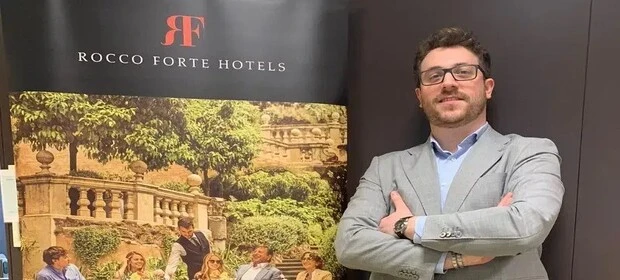
For Lapo Scarlatti, Recruitment Manager for Northern Italy at Rocco Forte Hotels, professional success depends on more than technical expertise. Active listening, empathy and servant leadership are essential to building effective teams and navigating a changing business environment.
What makes a difference when companies recruit the professionals of tomorrow? For Lapo Scarlatti, Recruitment Manager for Northern Italy at Rocco Forte Hotels, the answer goes beyond technical knowledge. Soft skills enable people to collaborate, grow and succeed in professional environments that are constantly evolving.
In an interview exploring the value of management education, Scarlatti discusses the collaboration between Rocco Forte Hotels and Rome Business School, highlighting the preparation of its graduates, the contribution of the Career Centre and the interpersonal skills organisations increasingly need.
The collaboration between Rome Business School and Rocco Forte Hotels is built around a key factor: preparing graduates to pursue successful professional and managerial careers.
According to Scarlatti:
Rome Business School graduates stand out for their preparation and readiness to embark on professional development paths. The School’s Career Centre also plays an important role by helping streamline connections between candidates and employers and maintaining strong relationships between education and business.
The continuity of this collaboration and the positive experiences developed over the years reflect the value of a relationship built on dialogue between educational institutions and companies.
For students, this means being part of an ecosystem where education, career guidance and contact with employers can help bridge the gap between academic study and professional life.
Technical expertise remains essential, but it is not enough on its own. When organisations face development needs and change management challenges, Scarlatti identifies soft skills as one of the most strategic areas of management education.
Three capabilities stand out:
These skills help teams work effectively together and enable leaders to build trust through the quality of their relationships and their approach to management.
For anyone aspiring to a management career, the message is clear:
knowing how to do the job is essential, but knowing how to work with people and lead teams is just as important.
Artificial intelligence is transforming processes, professions and organisational models. In this context, high-quality management education can help develop a competitive advantage, particularly when it combines technical preparation with personal development.
According to Scarlatti, in-person education offers value beyond the transfer of knowledge. Face-to-face interaction in the classroom encourages relationships, a sense of community, empathy and interpersonal skills: qualities that are difficult to replace in businesses where human relationships are central.
This is particularly relevant to the hospitality industry, where the quality of the guest experience also depends on professionals’ ability to understand individual needs, collaborate and build authentic relationships.
In a labour market increasingly influenced by technology, investing in human skills means preparing not only to use new tools, but also to manage change and build organisations where people can work effectively together.
Lapo Scarlatti’s perspective highlights a key principle for anyone entering the workforce or looking to advance professionally: management education must combine specialist knowledge, interpersonal capabilities and an understanding of one’s role within an organisation.
This perspective is particularly relevant to students pursuing Rome Business School’s International MBA, International Master in HR and Organization, and Executive Master in Marketing and Sales, who are preparing to develop skills for different professional responsibilities and career challenges.
The takeaway for future professionals is practical: continue developing your technical expertise, but give equal attention to listening, understanding others, collaborating and leading with empathy.